Joint problems are common in both men and women, but women face a higher risk due to hormonal changes,
age, and other factors. It’s crucial to understand why joint issues are more prevalent among women,
particularly in the field of Orthopaedics, as
well as the early signs and the role of nutrition in prevention. In this blog, we’ll explore the
underlying causes of joint pain in women, the warning signs, and how nutrition can be a powerful tool
for managing and preventing these issues, all through the lens of Orthopaedic care.
What Makes Women More Vulnerable to Joint Issues?
Several factors contribute to why women are more prone to joint
pain and related conditions:
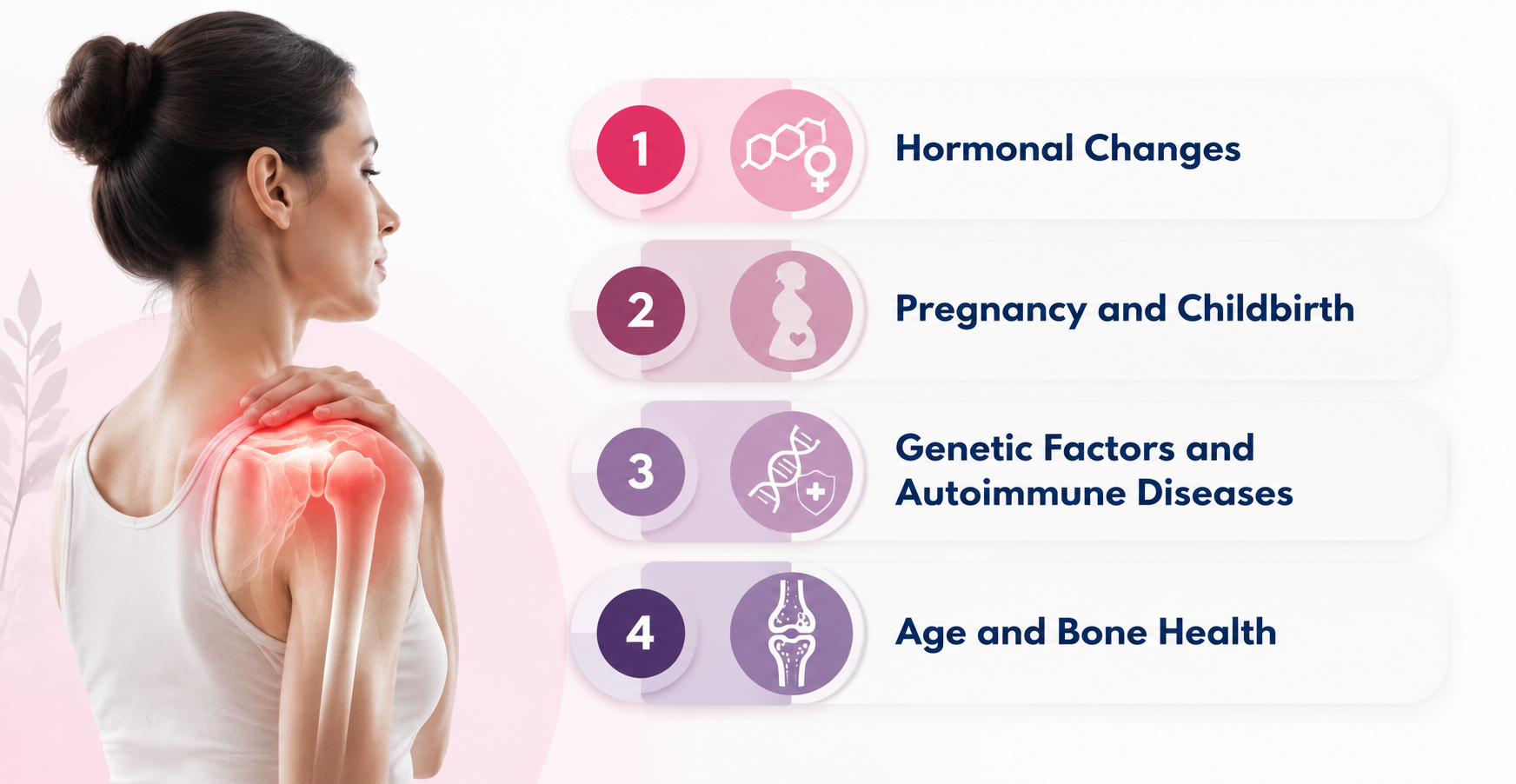
- Hormonal Changes: Women go through significant hormonal changes at
various
stages of life—during menstruation, pregnancy, and especially menopause. The
decrease in
estrogen levels during menopause has been linked to joint problems, such as
osteoarthritis.
Estrogen plays a role in maintaining the health of cartilage, so a drop in this
hormone can
lead to cartilage degradation, causing pain and stiffness.
- Pregnancy and Childbirth: During pregnancy, women experience
changes in
their body’s center of gravity and increased pressure on the joints, particularly
the lower
back, hips, and knees. Additionally, pregnancy hormones, like relaxin, loosen
ligaments in
preparation for childbirth, which can increase joint instability and pain.
- Genetic Factors and Autoimmune Diseases: Certain genetic factors
make women
more susceptible to autoimmune conditions like rheumatoid arthritis
(RA), where
the body’s
immune system attacks the joints. RA affects more women than men, especially during
their
30s and 40s.
- Age and Bone Health: As women age, particularly after menopause,
bone
density decreases. The weakening of bones combined with the natural wear and tear of
cartilage can result in joint degeneration, contributing to conditions like
osteoarthritis.
How Can You Identify Early Signs of Joint Problems?
Early detection of joint issues can help in managing the
condition before it worsens. Look out for these signs:
- Morning Stiffness: If you find that your joints feel stiff, especially in
the morning, it could indicate arthritis. This stiffness typically lasts for a few minutes
but can gradually worsen if left untreated.
- Pain During Movement: Persistent joint pain that worsens with movement is
another early sign. If certain movements or activities, such as walking, standing, or
climbing stairs, cause pain, it could be a signal that something is wrong with the joint.
- Swelling or Redness: Inflammation is a key symptom of many joint
conditions, including rheumatoid arthritis. If your joints become swollen, warm to the
touch, or red, it may indicate inflammation.
- Decreased Range of Motion: When you notice difficulty fully extending or
flexing a joint, it could point to an underlying issue. Reduced mobility in joints, such as
the knees, hips, or shoulders, can be a sign of arthritis or joint wear.
- Unexplained Fatigue: If you’re feeling unusually tired and lethargic, joint
problems, especially autoimmune conditions like RA, can sometimes cause systemic fatigue in
addition to joint discomfort.
What Role Does Nutrition Play in Joint Health?
Nutrition plays an essential role in maintaining healthy joints
and preventing the onset of joint issues. The right nutrients can reduce inflammation, support
bone health, and keep your joints lubricated.
- How Do Omega-3 Fatty Acids Help? Omega-3 fatty acids are known for their
anti-inflammatory properties. They can help reduce joint pain and stiffness, particularly in
conditions like rheumatoid arthritis. Foods rich in omega-3s, such as salmon, flaxseeds, and
walnuts, can have a protective effect on your joints.
- Why Is Vitamin D Important for Your Joints? Vitamin D is essential for
calcium absorption, which is crucial for bone health. A deficiency in vitamin D can lead to
joint pain and conditions like osteomalacia, where the bones become soft and weak. Sun
exposure, fortified foods, and supplements can help maintain adequate vitamin D levels.
- How Can Calcium Strengthen Your Bones? Calcium is critical for bone density
and strength. Women, especially after menopause, are at risk of osteoporosis, which can make
bones more fragile and prone to fractures. Dairy products, leafy greens, and fortified
plant-based milk are great sources of calcium.
- Why Should You Consider Collagen for Joint Health? Collagen is a protein
found in cartilage, tendons, and ligaments. Consuming collagen-rich foods, such as bone
broth or collagen supplements, can help rebuild and maintain joint cartilage, reducing the
likelihood of joint pain as you age.
- What Role Do Antioxidants Play in Reducing Joint Inflammation?
Antioxidants, found in fruits and vegetables like berries, spinach, and kale, help
neutralize free radicals in the body. This helps reduce oxidative stress and inflammation in
the joints, contributing to long-term joint health.
- How Can Ginger and Turmeric Alleviate Joint Pain? Both ginger and turmeric
have natural anti-inflammatory properties that can help reduce pain and swelling in the
joints. Adding these spices to your diet can be an effective way to alleviate symptoms of
arthritis and improve joint function.
- What Is the Importance of Staying Hydrated? Water is vital for joint
lubrication. Synovial fluid, which cushions the joints, relies on hydration to function
properly. Ensuring you stay well-hydrated can help prevent joint friction and reduce pain.
When Should You Seek Professional Help for Joint Issues?
It’s important not to ignore persistent joint pain. If you are experiencing any of the symptoms
mentioned above, it’s time to seek professional help. Early diagnosis and treatment can prevent
further damage and help you manage the condition effectively.
For high-quality care in Mumbai, the Bombay Hospital and Medical
Research
Centre is an
excellent
choice offering specialized services in Rheumatology and other critical areas such as
Cardiology, Orthopedics, and
Neurology.
For more information or to book an appointment, visit
Bombay Hospital.
Bombay Hospital
12, Vitthaldas Thackersey Marg, New Marine Lines,
Marine Lines, Mumbai, Maharashtra 400020.
FAQs
Joint pain in women can be caused by hormonal changes, age, autoimmune conditions, and
pregnancy-related stress on joints. Osteoarthritis and rheumatoid arthritis are common
culprits.
Yes, eating a balanced diet with nutrients like omega-3 fatty acids, vitamin D, calcium,
and antioxidants can help reduce the risk of joint issues and alleviate symptoms of
existing conditions.
Early signs include joint stiffness, pain during movement, swelling, redness, and
fatigue. It’s essential to address these symptoms early to prevent further damage.
Regular exercise, weight management, and consuming joint-supporting nutrients like
collagen and vitamin D can enhance joint flexibility and mobility.
If your joint pain is persistent, worsening, or impacting your daily activities, it’s
time to consult a healthcare professional at Bombay Hospital Mumbai for proper diagnosis
and treatment.
Why Should You Act Now?
Joint problems are not only painful but can also affect your overall quality of life. Recognizing
the early signs and taking proactive steps—like improving your diet and seeking medical advice—can
significantly improve joint health and reduce the risk of severe complications. Remember, women’s
joint health deserves attention, and by making small changes today, you can protect your joints for
tomorrow.