Cancer is a complex and life-changing diagnosis. When someone is diagnosed with cancer, one of the most
important decisions involves determining the right approach to treatment. This often leads patients to
question the roles of the specialists involved. Among the various specialists, surgical oncologists and medical oncologists play crucial
roles, but their functions in cancer care are distinct. Understanding these roles is essential for
patients to navigate their treatment journey effectively.
In this blog, we will explore the differences between surgical oncologists and medical oncologists, how
they contribute to cancer care, and when to consult each specialist. We will also discuss the importance
of comprehensive cancer treatment and the collaboration between these specialists for the best outcomes.
What is a Surgical Oncologist?
A surgical oncologist is
a medical professional specializing in the surgical treatment of cancer. Their role is centered
around performing surgeries to remove tumors or affected tissues in the body. Surgical
oncologists are well-trained in various types of cancer surgeries, including those involving the
breast, colon, liver, pancreas, and other organs.
Key Responsibilities of a Surgical
Oncologist:
Tumor Removal: Surgical oncologists are
responsible for removing tumors or cancerous tissue from the body. This may involve
performing biopsies to confirm cancer diagnoses or surgical excisions to remove tumors.
Staging Cancer: They help determine the
stage of cancer by surgically removing affected areas and examining them under a
microscope.
Minimally Invasive Techniques: Many
surgical oncologists are trained in advanced, minimally invasive techniques, such as
laparoscopic surgery, which allows for smaller incisions, quicker recovery, and less
pain.
Collaboration: They often work alongside
medical oncologists, radiation oncologists, and other specialists to ensure a
comprehensive treatment approach.
Surgical oncologists play a pivotal role in the early stages of cancer diagnosis and treatment,
particularly in cases where removing the tumor is the most effective option for controlling the
disease.
What is a Medical Oncologist?
A medical oncologist is
a doctor who specializes in the medical treatment of cancer, primarily through chemotherapy,
immunotherapy, and hormone therapy. They focus on using non-surgical methods to manage and treat
cancer, particularly in patients whose cancer is not amenable to surgical intervention.
Key Responsibilities of a Medical
Oncologist:
Chemotherapy: Medical oncologists
administer chemotherapy, which uses powerful drugs to kill or shrink cancer cells. They
carefully monitor patients’ response to chemotherapy and adjust treatment plans as
needed.
Immunotherapy: Medical oncologists are also
involved in prescribing immunotherapy, which boosts the body’s immune system to fight
cancer cells more effectively.
Targeted Therapy: They prescribe targeted
therapies that attack specific cancer cells based on genetic mutations, providing a more
personalized approach to cancer treatment.
Long-Term Cancer Management: For patients
who undergo surgery, medical oncologists often play a role in follow-up care, ensuring
that any remaining cancer is controlled or managed through ongoing treatments.
Medical oncologists are critical in the treatment of cancers that are not suitable for surgery,
or when surgery is followed by systemic treatment to prevent recurrence.
Key Differences Between Surgical and Medical Oncologists
While both surgical oncologists and medical oncologists are specialists in cancer care,
their roles differ significantly:
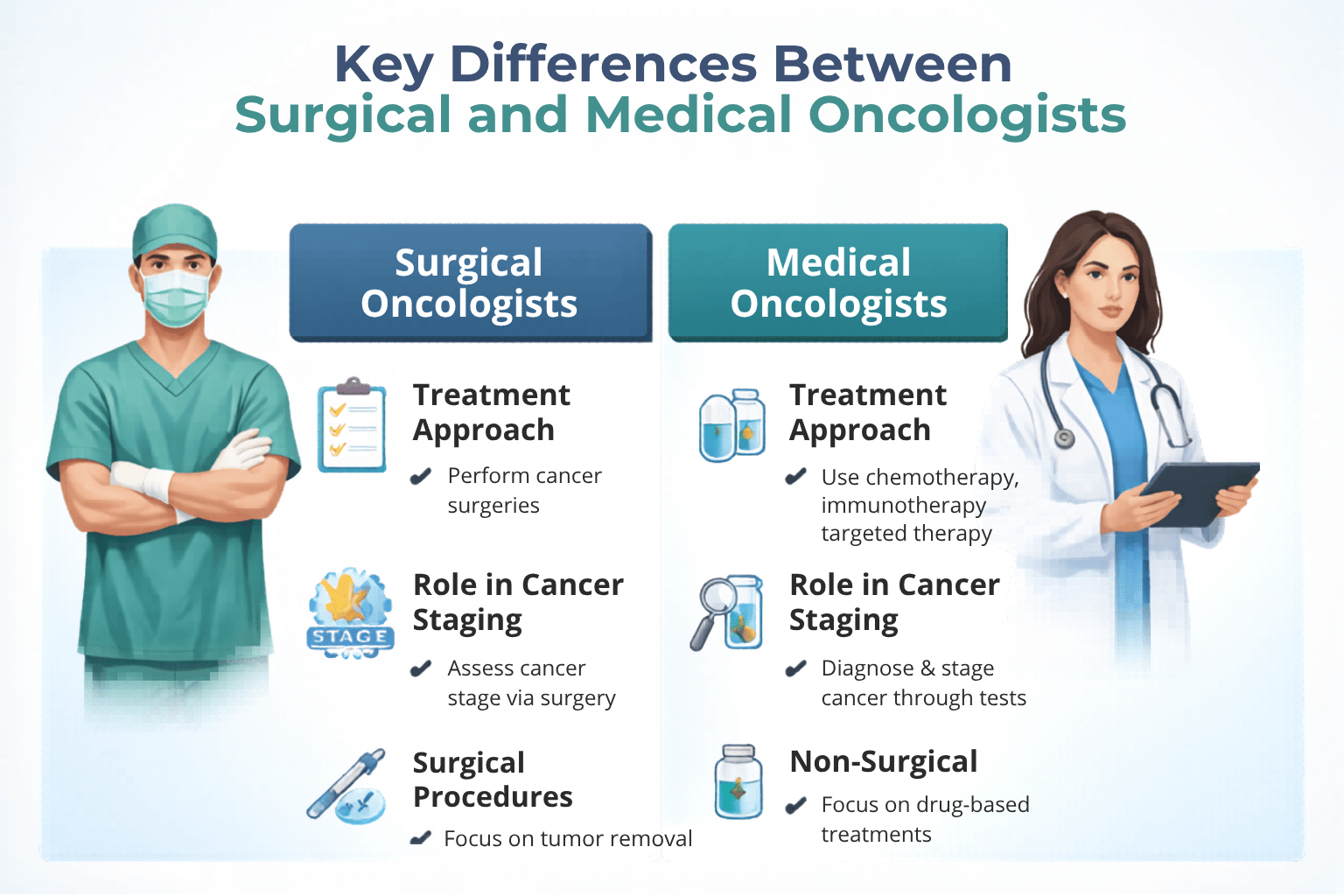
Treatment Approach: Surgical oncologists
focus on physically removing tumors or diseased tissue, while medical oncologists focus
on systemic therapies like chemotherapy and immunotherapy.
Role in Cancer Staging: Surgical
oncologists are directly involved in the staging process, particularly when surgical
removal of a tumor is required. Medical oncologists help manage the ongoing treatment of
cancer after staging.
Surgical Procedures vs. Non-Surgical:
Surgical oncologists perform surgeries, whereas medical oncologists provide treatments
that do not require surgery.
Both types of oncologists often work together to provide comprehensive care for cancer
patients, ensuring both local tumor control and systemic management.
When Should You Consult a Surgical Oncologist?
If your doctor has diagnosed you with cancer and recommends surgery as part of the treatment
plan, a surgical oncologist will be the specialist you consult. They will guide you through the
surgical process, including the risks, benefits, and expected outcomes. Surgical oncologists
typically work with other specialists, such as radiologists, pathologists, and medical
oncologists, to ensure you receive optimal care.
A surgical oncologist is usually consulted when:
- You require surgery to remove a tumor.
- The tumor is located in a place where it can be surgically removed.
- You need a biopsy to diagnose cancer or determine the cancer stage.
When Should You Consult a Medical Oncologist?
Once cancer has been diagnosed, particularly if the disease has spread or surgery is not an
option, a medical oncologist becomes a central part of the treatment team. They will determine
whether chemotherapy, immunotherapy, or other systemic therapies are appropriate for your
condition.
A medical oncologist should be consulted if:
- Your cancer requires treatment beyond surgery (e.g., chemotherapy or immunotherapy).
- You are managing side effects from cancer treatments.
- Your doctor recommends a non-surgical treatment approach.
Introduction for Consultation in Mumbai
For patients seeking comprehensive cancer care, Mumbai stands out as a hub for quality medical
services, drawing patients not only from India but also from across South Asia. The city boasts
some of the best medical facilities, and Bombay Hospital and Medical Research Centre is a
leading institution in providing world-class medical care. Located in the heart of South Mumbai,
it offers an extensive range of services, including Oncology, Cardiology, Neurosurgery, Gastroenterology,
and more.
Patients can visit the hospital for consultations with top oncology experts, including surgical
and medical oncologists. To book an appointment, you can reach the hospital at Bombay Hospital – Mumbai.
Bombay Hospital
12, Vitthaldas Thackersey Marg, New Marine Lines,
Marine Lines, Mumbai, Maharashtra 400020.
FAQs About Surgical and Medical Oncologists
Surgical oncologists perform surgeries to remove tumors, while medical oncologists focus
on using chemotherapy, immunotherapy, and other non-surgical treatments to manage
cancer.
You should consult a surgical oncologist if your doctor recommends surgery to remove a
tumor or if you need a biopsy to confirm the presence of cancer.
Medical oncologists treat cancer using medications, including chemotherapy,
immunotherapy, and targeted therapies, which work throughout the body to control or
eliminate cancer.
No, chemotherapy is administered by medical oncologists. Surgical oncologists specialize
in performing surgeries related to cancer.
These specialists collaborate to provide comprehensive care, with surgical oncologists
handling tumor removal and medical oncologists managing chemotherapy and other
treatments to ensure the best possible outcome.
Conclusion
The roles of surgical oncologists and medical oncologists are both critical in the fight against
cancer. Surgical oncologists focus on removing tumors and staging cancer, while medical oncologists
provide treatments to manage the disease systemically. Understanding the differences between these
specialists helps you navigate your cancer treatment options and understand when to consult each
expert. For comprehensive care, seeking guidance from qualified specialists, such as those at Bombay
Hospital in Mumbai, is crucial to ensure you receive the most effective treatment possible.