Autism Spectrum Disorder (ASD) is a complex developmental condition that affects how a child
communicates, behaves, and interacts with others. As a parent or caregiver, recognizing the early signs
of autism can be critical in ensuring your child receives the support they need. Early intervention
plays a key role in managing the condition, allowing children to develop skills that help them lead
fulfilling lives. In this blog, we will explore the early signs of autism, the causes behind the
disorder, and the steps involved in its diagnosis, with insights from Paediatrics experts to guide you
through the process.
Early Signs of Autism in Children
Autism presents differently in each child, but certain early signs can help identify the
condition. While some of these signs may appear as early as infancy, they typically become more
apparent between the ages of 2 and 3. Recognizing these signs early can lead to a quicker
diagnosis and timely intervention. Consulting a skilled Paediatrician in Mumbai
can play a crucial role in identifying these early signs and providing the necessary guidance
for proper care.
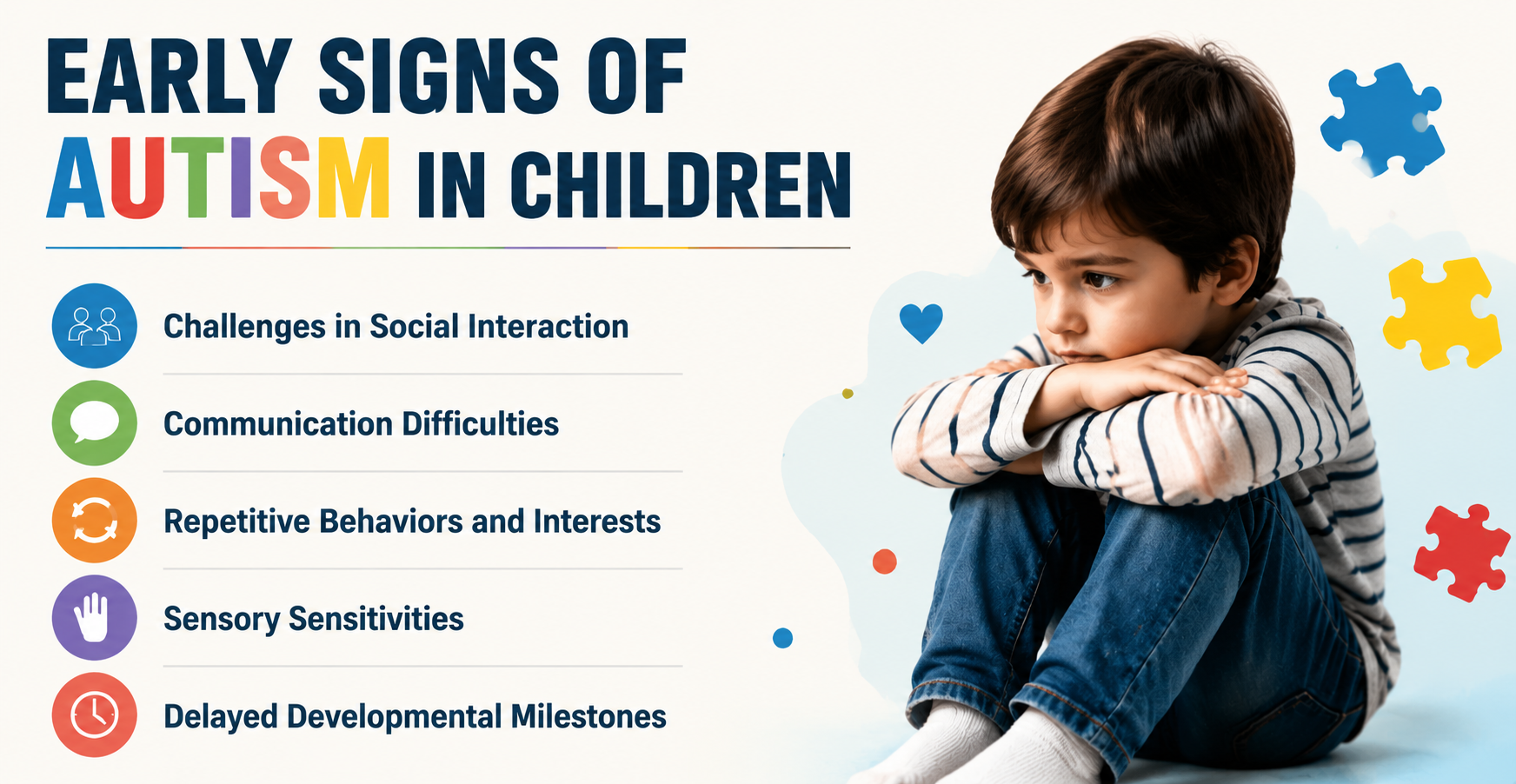
Challenges in Social Interaction:
- A child with autism may avoid making eye contact or show little interest in
socializing with
others.
- They might struggle to understand social cues, such as facial expressions or body
language,
making it harder for them to interact with peers.
Communication Difficulties:
- Delayed speech development or a complete lack of verbal communication is a common
sign. Some
children may speak in a robotic or monotone voice.
- Many children with autism also have difficulty using gestures like pointing or
waving to
communicate their needs.
Repetitive Behaviors and Interests:
- Engaging in repetitive movements like hand-flapping, rocking, or spinning objects is often
seen in children with autism.
- These children may also have a deep, obsessive interest in specific objects or topics, such
as lining up toys in a particular order.
Sensory Sensitivities:
- Children with autism may overreact or underreact to sensory stimuli. For example, they might
become upset in noisy environments or show little interest in sensory experiences like touch
or taste.
- Certain textures, sounds, or lights may trigger distress.
Delayed Developmental Milestones:
- Children may have delays in motor skills, such as difficulty walking, running, or mastering
fine motor tasks like drawing or writing.
- Cognitive delays may also be present, with a child struggling to grasp basic concepts or
solve problems as expected for their age.
Causes of Autism in Children
The exact causes of autism are not fully understood, but research suggests that multiple factors
contribute to its development. These factors include genetic influences, environmental factors,
and neurological development.
Genetic Factors:
- Autism often runs in families, which suggests a genetic component. Certain genes may
predispose a child to autism, though no single gene has been identified as the cause.
- Studies indicate that children with a sibling who has autism are at a higher risk of
developing the disorder.
Environmental Factors:
- Some environmental factors may increase the likelihood of autism. For example, exposure to
certain chemicals, drugs, or infections during pregnancy can affect a child’s brain
development.
- Maternal health conditions, age, and complications during pregnancy or birth can also play a
role in the development of autism.
Neurological Factors:
- Brain development differences have been observed in children with autism. These differences
may affect how the brain processes information, particularly in areas responsible for social
interaction, communication, and sensory perception.
- Abnormal brain wiring could contribute to the social and behavioral challenges seen in
autism.
Diagnosing Autism in Children
Diagnosing autism involves several steps. Early diagnosis is crucial because it allows for
intervention at a time when a child’s brain is still developing, improving the chances for
positive outcomes.
Developmental Screening:
- Pediatricians typically assess a child’s development during routine checkups. If a child
shows signs of delayed speech or social difficulties, further evaluation may be recommended.
- Screening tools like the Modified Checklist for Autism in Toddlers (M-CHAT) help identify
children who may be at risk for autism.
Comprehensive Evaluation:
- If a child’s screening results indicate potential autism, a comprehensive evaluation by a
team of specialists is necessary. This team may include a developmental pediatrician, child
psychologist, speech therapist, and occupational therapist.
- The evaluation includes interviews with parents, observations of the child’s behavior, and
assessments of speech, social skills, and other developmental areas.
Autism Diagnostic Observation Schedule (ADOS):
The ADOS is a standardized tool used to observe and evaluate a child’s behavior in a structured
setting. It assesses social interaction, communication, play, and repetitive behaviors.
Additional Tests:
In some cases, genetic testing or brain imaging may be recommended to rule out other conditions
or investigate underlying neurological causes.
Managing Autism: Early Intervention is Key
While there is no cure for autism, early intervention can help children develop essential
skills. These interventions can help improve their communication, social interactions, and
ability to adapt to everyday life.
Behavioral Therapy:
Applied Behavior Analysis (ABA) is a widely used therapy that focuses on reinforcing positive
behaviors and reducing unwanted behaviors. This therapy helps children with autism develop
important life skills.
Speech and Language Therapy:
Speech therapists work with children to improve their communication skills. This may include
helping the child understand language, use words, and develop non-verbal communication methods
like sign language or picture communication systems.
Occupational Therapy:
Occupational therapy helps children develop fine motor skills, manage sensory processing issues,
and improve their ability to perform daily tasks like eating, dressing, and writing.
Social Skills Training:
Children with autism often struggle with social interactions. Social skills training helps them
learn how to engage with others, understand social cues, and make friends.
Parental Support and Training:
Parents play a vital role in the development of a child with autism. Support groups and training
help parents learn how to provide effective strategies and tools at home to support their
child’s growth.
Consultation at Bombay Hospital, Mumbai
Mumbai is home to world-class medical facilities, and Bombay Hospital and Medical
Research
Centre stands out as one of the leading healthcare providers in the region. With over 70
years
of experience, Bombay Hospital offers a wide range of specialized services across several
medical disciplines, including Cardiology, Neurology, Oncology,
Paediatrics, and more.
Bombay Hospital is
dedicated to providing the best care possible for children
with developmental
disorders, including autism. Their team of experts can guide parents through the diagnosis and
treatment process, helping children with autism achieve their full potential.
To schedule a consultation at Bombay Hospital, you can call +91-22-22067676 or email
helpdesk@bombayhospital.com. For international patients, contact marketing@bombayhospital.com.
Visit the hospital at Bombay Hospital, 12, Vitthaldas Thackersey Marg, near Liberty Cinema, New
Marine Lines, Marine Lines, Mumbai, Maharashtra 400020.
Frequently Asked Questions (FAQs)
Early signs include difficulty with eye contact, delayed speech, repetitive behaviors,
and sensory sensitivities. Some children may also show limited interest in social
interactions.
Autism is diagnosed through a developmental screening followed by a comprehensive
evaluation by a team of specialists, including pediatricians, psychologists, and
therapists.
There is no cure for autism, but early intervention and therapies like behavioral
therapy, speech therapy, and occupational therapy can significantly help children
improve their skills and quality of life.
Yes, signs of autism can be observed in infants, particularly in their social
interactions and communication skills. A formal diagnosis is usually made after 18
months to 2 years of age.
Therapies include Applied Behavior Analysis (ABA), speech and language therapy,
occupational therapy, and social skills training, all of which help children develop
important life skills.
Final Thoughts
Recognizing the early signs of autism in children and seeking timely professional help can make a
significant difference in their development. The earlier the intervention, the better the outcomes
for children with autism. If you suspect your child may be showing signs of autism, don’t hesitate
to seek help from medical professionals at a reputable hospital like Bombay Hospital. With the right
support, children with autism can thrive and lead successful, fulfilling lives.